
Production managers don’t book crew on promises. They want proof that you’ve done the work before and can deliver.
For many film crew professionals, a strong portfolio doesn’t need a complicated showreel. A selection of clear, professional photographs can demonstrate your skills, experience and the type of productions you’ve worked on.
Your crew portfolio should show what you do, how you work and what you contribute to a production.
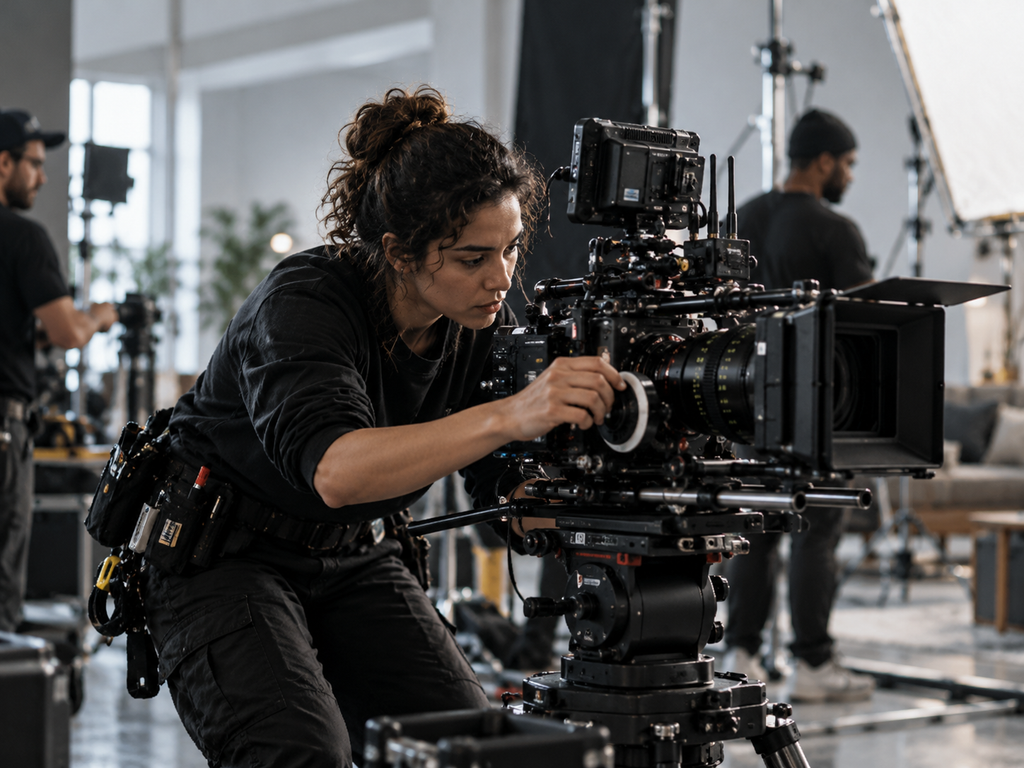
Start with 8–10 carefully selected photographs that represent your best work.
Choose images that show:
Every photograph should have a purpose. Quality matters far more than quantity.
Different departments need to demonstrate different skills.
Camera and cinematography: Camera setups, operating positions, rigs and behind-the-scenes work.
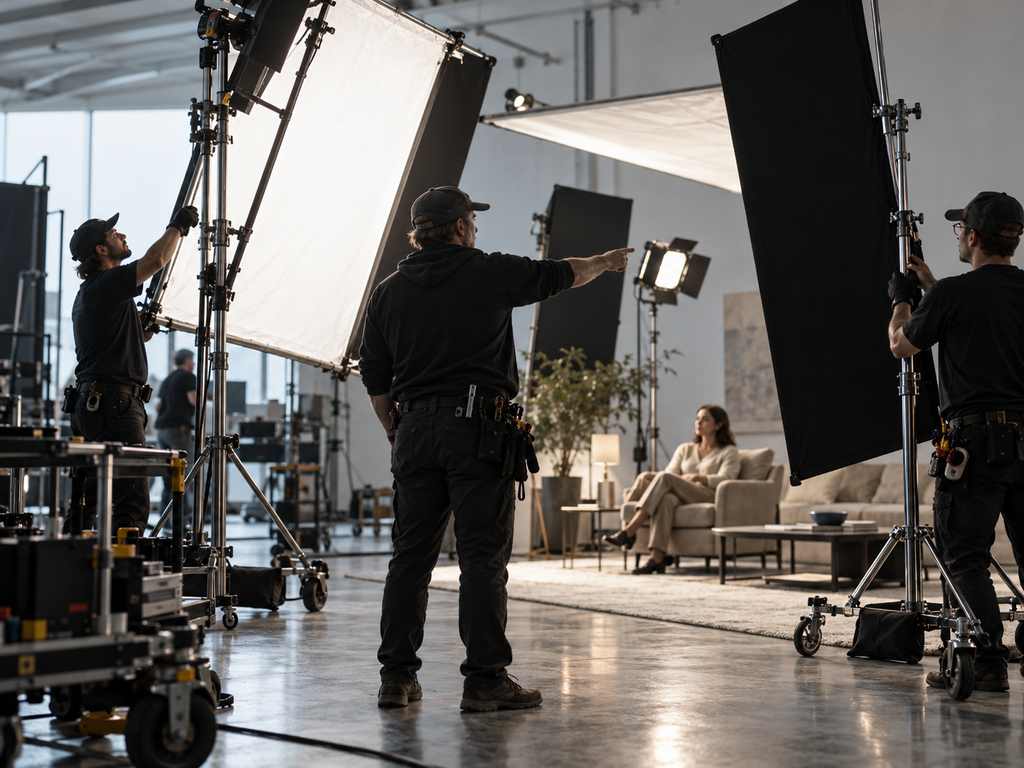
Lighting and grip: Lighting installations, rigging, equipment setups and before-and-after examples.
Production design and set construction: Spaces before and after transformation, set builds, props and finished environments.
Wardrobe and make-up: Finished looks, preparation, continuity and specialist techniques.
Sound: Recording setups, boom operation, sound carts and challenging locations.
Editing and visual effects: Work-in-progress examples, before-and-after frames and completed work where permission has been granted.
The aim is simple: show your contribution, not just the finished production.
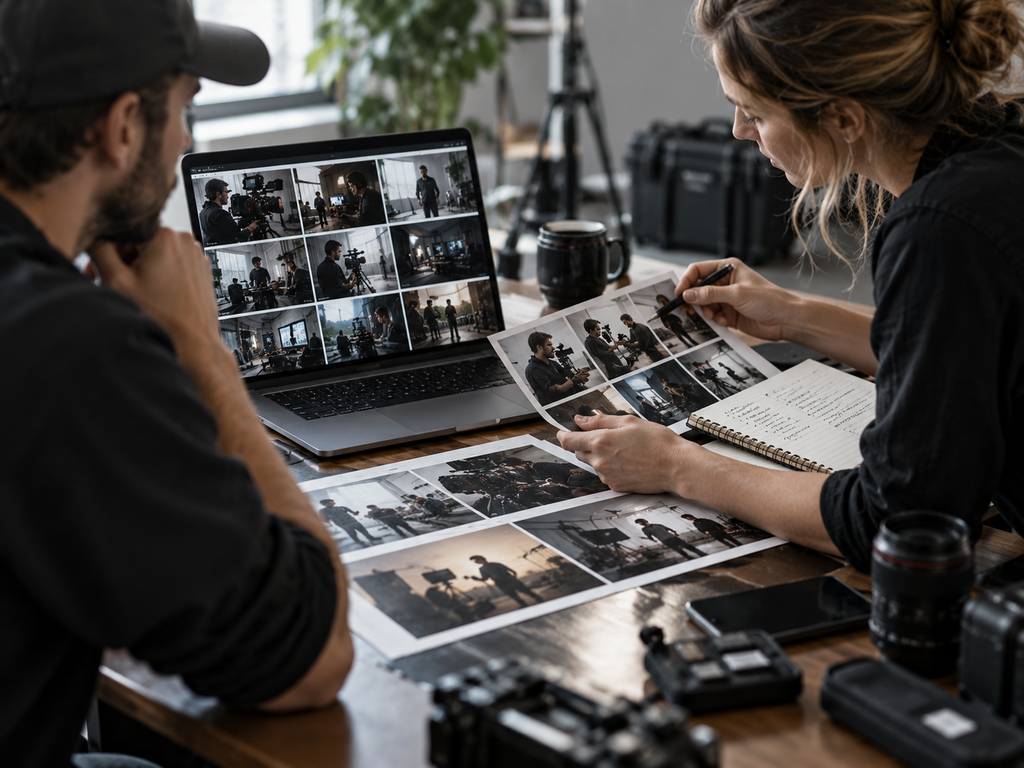
A well-organised portfolio makes it easier for production managers to understand your capabilities quickly.
Not every photograph taken on a production can be shared publicly.
Before adding images to your portfolio, check your production agreement and make sure you have permission to use the material.
Be especially careful with:
When in doubt, ask the production company or rights holder before publishing.
Protecting confidential information is part of being a reliable industry professional.
If you’re a freelancer or solo operator, your portfolio can also demonstrate the equipment and services you provide.
For example, a drone operator might show the equipment setup and examples of aerial work. A sound recordist could demonstrate their recording kit and working environment.
Include photographs that help potential clients understand both your expertise and what you bring to a production.
Your portfolio is only one part of your professional presentation.
Make sure your reCREWt profile accurately describes your departments, specialisations, experience, location and availability, using the fields currently offered by the platform.
Keep your information updated and describe your work clearly.
A strong profile combines professional experience with practical evidence of your abilities.
Your work should speak for itself. Make it easy for the right people to see it.
Not on reCREWt. Crew show their work in images, and for most departments a few strong photos say more than a reel would.
About ten. Enough to show your range, few enough that every one is strong.
Only with permission. Those photos belong to someone else, so ask the production and credit the photographer in your caption.
Check your contract first. Advertising campaigns often have strict release dates, and posting before the campaign goes live can cost the client, and you, the next job.